How Is Meningitis B Different from Other Types of Meningitis?
Published
Categorized as Health & Beauty
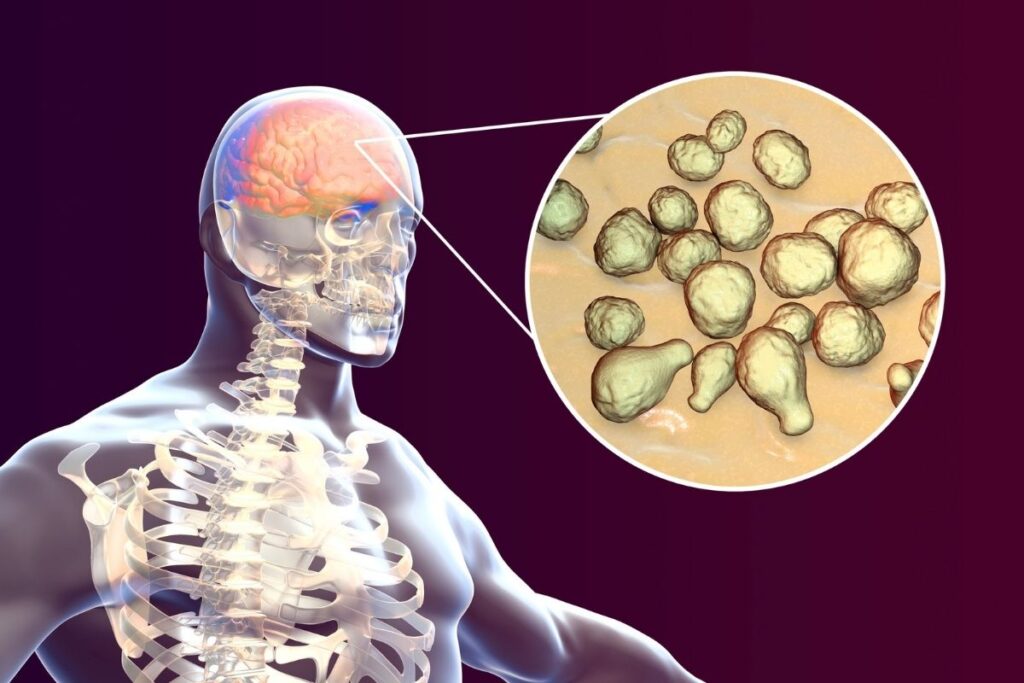




Meningitis is when the membranes around the brain and spinal cord swell. This swelling can cause serious health problems. It can affect anyone, regardless of age. However, not all meningitis is the same. Meningitis B (MenB) is unique in many ways. This includes who it affects, how it behaves, and how we vaccinate against it.
Table of Contents
Meningitis is the inflammation of the meninges. The meninges are the layers that protect the brain. This inflammation often happens due to an infection, usually from a bacterium or a virus.
Viral meningitis is the most common type in adults and older children. Bacterial meningitis is rare but can be life-threatening. It may also lead to serious long-term problems. It’s crucial to treat bacterial meningitis with antibiotics quickly.
Common symptoms are fever, neck stiffness, confusion, headache, sensitivity to light, nausea, and vomiting.
Bacterial meningitis from *Neisseria meningitidis* (meningococcus) is classified by its outer capsule structure. Five of the known serogroups—A, B, C, Y, and W—cause almost all invasive cases. In the United States, most meningococcal disease is from serogroups B, C, W, and Y.
In Europe, groups B and C of N. meningitidis cause most of the disease. In Africa, group A mainly causes meningococcal meningitis. It makes up about 80–85% of cases in the meningitis belt.
MenB mainly affects children under one year old. It can cause fever, poor feeding, vomiting, and lethargy. It can also cause septicaemia (blood poisoning), which can lead to the telltale purple rash. There is also a second peak of the disease in adolescents, though not as common as in infants.
College students living in on-campus housing or Greek houses have double the risk. They are twice as likely to get Meningitis B.
Meningococcal bacteria spread easily. They spread through contact with an infected person’s saliva or nasal secretions. This can occur from sneezing, kissing, or sharing drinks. The bacteria do not spread through air, food, or water. They also don’t spread through casual contact. This means places like classrooms, restaurants, and other social settings are safe.
Meningitis caused by Neisseria meningitidis appears as a fast-spreading petechial rash. This rash has many small, uneven purple or red spots. You can find it on the trunk, lower legs, and mucous membranes. It usually does not blanch; the redness stays when pressed with a finger or glass.
The key difference about Meningitis B is its vaccine. Vaccines for serogroup B meningococcal disease are difficult to produce. They need a different approach than vaccines for other types. The capsular polysaccharide from type B bacteria is similar to human molecules. These molecules help with neural adhesion. They share many features. This similarity is a concern. This similarity makes it a poor target for vaccines. Instead, these vaccines use different antigenic components from the organism.
The MenB vaccine protects against group B meningococcal disease. This group causes many cases of bacterial meningitis in the UK. It is mainly given to babies at 8 weeks, 16 weeks, and again at 1 year. This is part of the routine childhood immunisation schedule.
The MenACWY vaccine protects against four types of meningococcal bacteria: A, C, W, and Y. It’s given to teens when they turn 14. This is especially important for those going to university.
In the US, MenB vaccines, Bexsero® and Trumenba®, protect against serogroup B. However, studies show that protective antibodies drop quickly. They often fall within 1 to 2 years after vaccination.
In 2025, vaccine coverage expanded further. Two combination vaccines — Penbraya (Pfizer) and Penmenvy (GSK), licensed in 2023 and 2025, respectively — now combine MenACWY protection with MenB protection in a single shot.
In bacterial meningitis, the white cell count in cerebrospinal fluid is very high. This count is much higher than in viral meningitis. The protein level is also higher, while glucose levels are lower. This difference is crucial. Antibiotics are key for bacterial meningitis. They don’t work for viral meningitis.
Of those who get bacterial meningitis, 10–15% will die. So, early diagnosis and treatment are crucial for survival.
Meningitis B is different from other types because of its unique bacteria. This made it hard to develop vaccines. It mainly affects infants and college students. It also causes a non-blanching rash and needs a special vaccine. The MenB vaccine is a big achievement, but some strains are not included. So, this vaccine alone can’t eliminate meningitis.
If you or someone else has a sudden fever, a bad headache, or a stiff neck, get help right away. If there’s a rash that won’t fade, seek emergency care immediately.

Sign up to receive our email, delivering the latest stories straight to your inbox.