EU Entry/Exit System (EES): Chaos, Delays, and What Travellers Need to Know
Published
Categorized as Travel
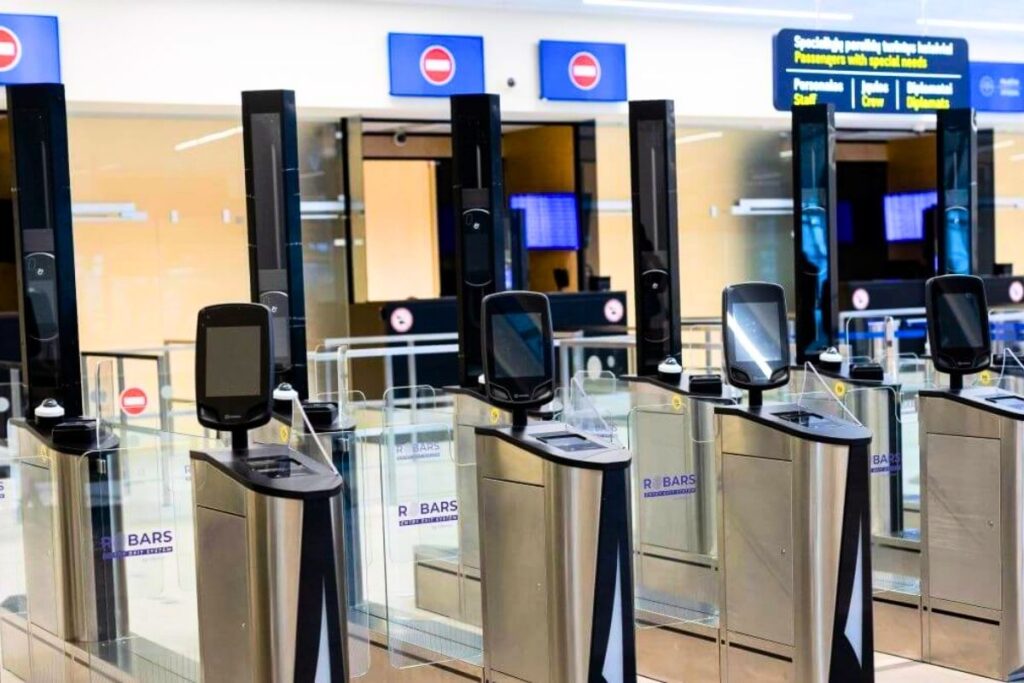




EU Entry/Exit System (EES) is a modern electronic immigration system that will eliminate the need for manual passport stamping by border patrol officers at passport control points in the Schengen region. The EES registers information on arrivals and departures to and from the European countries that are members of this system whenever a person arrives or departs from the EU or Schengen region.
Through this modern system, those entering the European countries from non-participating countries such as the United States and the UK will have their fingerprints and photos registered in a common database instead of having their passports stamped.
The EES came into effect on October 12, 2025; it was phased in gradually, becoming completely operational on April 10, 2026. The EES targets citizens from outside the European Union intending to make a short stay in the Schengen area, either for visitation, tourism, or a business visit for up to 90 days in 180 days in 29 member states. Those who use their Irish passports are exempted. Those holding passports from the United Kingdom are also exempt, provided they hold an EU residence permit.
Table of Contents
“The implementation of the new EU Entry/Exit System has led to travel chaos at the airports because of problems with border controls, resulting in waiting lines that may take up to three hours, as well as passengers who might have missed their flights.”
The airports and airlines advised the European Commission and the Member States of the EU to allow more operational flexibility from the very beginning of the implementation process. This was viewed as necessary on the part of the industry due to the difficulties they were facing.
Over 100 passengers failed to board their EasyJet plane to Manchester from Milan’s Linate Airport due to the long queues at the passport checkpoint. The passengers said that some people fainted due to the stress and waiting time. According to one passenger, he had to spend £1,800 on other methods of going home because the flight would come after four days.
According to ACI Europe, the system went down in some places due to outages and configuration issues, which further hindered the process. In Prague’s Václav Havel Airport, for example, Czech officials have apparently directed border guards to collect biometric information manually during passport checkpoints because the machines weren’t working, creating long queues.
The Airports Council International (ACI) has reported an increase in processing times by 70% in certain cases because of the additional procedures required for the collection of biometric information. According to the European Commission, the registration process is expected to take 70 seconds per passenger when operating at maximum capacity; however, airport and airline organisations have stated that such estimates do not represent today’s reality.
An observation by ACI Europe on staffing shortage was seen, where it noted there was usually a problem of a lack of sufficient border guard personnel who have been trained to manage the extra load. ETIAS At Lisbon Airport, Portugal, in January 2026, twenty-four officials from the National Republican Guard have been posted at Lisbon Airport due to delays at the same airport in December 2025.
Another major problem is that there is no such facility for pre-registration. Because of the absence of any facility of pre-registration, passengers have to register themselves after their arrival and have to go through the whole procedure.
In France, Parafe e-gates — which rely on facial recognition — still do not process UK or US passports. A legal expert noted the gates would not be fully compatible with EES until the end of March 2026. Even travellers who have already registered with EES may still be asked to present documents manually if border systems are not yet fully operational.
The experience varies widely by airport. At Venice, for instance, the process was described as fast, organised, and genuinely painless — with staff directing passengers efficiently and kiosks completing the full registration in about 60 seconds. At other airports, the contrast was stark.
Airports in France, Germany, Italy, Spain, Portugal, Greece, and Iceland have been some of those most affected by the introduction.
ACI EUROPE and Airlines for Europe (A4E) pointed out that the difficulties they warned about before its implementation have become reality, and called on the European Union and its Member States to take action. They stressed that border control authorities must be allowed to fully suspend the EES when waiting times become excessive — “not only in the coming weeks, but throughout the peak summer travel season.”
The EC has indicated that it will allow for the flexible application of EES controls until September 2026 to facilitate smooth operation at critical junctions. Travel Tomorrow Airlines like Lufthansa and Eurowings have been using ground staff to ensure that non-EU nationals pre-register through the mobile app before travelling.
Though chaotic, initial findings show that there have been some positive security outcomes. Initial reports reveal that the new system has so far recorded more than 52 million entries, flagged almost 700 persons as security threats, and denied access to more than 27,000 individuals.
The EES will be linked with ETIAS, a new EU visa waiver system similar to the U.S. ESTA program that will become available in late 2026 and will cost €20 per travel authorisation for eligible travellers from non-EU countries.

Sign up to receive our email, delivering the latest stories straight to your inbox.