Who Is Miatta Fahnbulleh? Inside the Rise of Labour’s Economic Voice
Published
Categorized as Politics
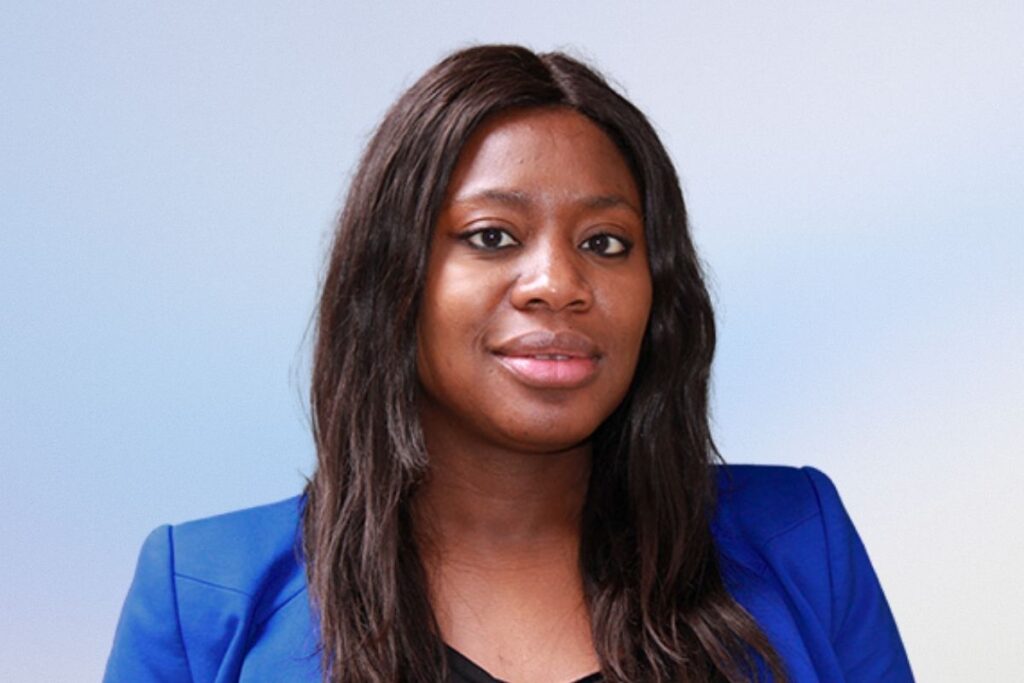




Miatta Fahnbulleh has gone up really swiftly and in a huge manner in British politics. She’s a professional economist, has led a think tank and been an MP. People in the Labour Party think she is one of their brightest economic thinkers. She is a refugee child from Liberia and now works in Westminster. The tale of her is as intriguing as the policies she has advocated for. On May 12, 2026, she did something even braver: she was the first minister to walk out of Keir Starmer’s cabinet and call publicly on the Prime Minister to resign.
Table of Contents
She was born on September 29, 1979, in Liberia. And her name is Miatta Nema Fahnbulleh. Her father was from Liberia, and her mother from Sierra Leone. In 1986, the First Liberian Civil War began. The family escaped to England and took refuge. Moving and rebuilding would really influence her beliefs, and it would also affect her political career, which would be about fairness, economic justice and the well-being of the vulnerable.
She then proceeded to Beechwood Sacred Heart School, an independent school in Tunbridge Wells. There, she earned a Bachelor of Arts in Philosophy, Politics and Economics in 2000. In 2005, she received a PhD in economic development from the London School of Economics.
Miatta Fahnbulleh is not a typical leader. She has called for major changes in the way the economy operates and considers herself a “heterodox economist. In other words, she does not believe in the most common principles of business. For example, she asks if growth alone can solve the problem of inequality and instead calls for adjustments to the system.
Labour is for change to the economy, slow or massive, to varying degrees. People like Fahnbulleh appear to be in the latter category, because she used to work “trying to persuade policymakers to adopt ideas that would fundamentally change the economy.”
She has strong opinions since she has lived through harsh times and worked on policy at the highest levels for years.
Before he became an MP, Fahnbulleh was already a household name in the public affairs area. She was Head of Cities in the Cabinet Office from 2011 to 2013. She was head of policy and research at the IPPR from 2016-17. From 2017-2023, she was CEO of the New Economics Foundation (NEF). The NEF is a leading progressive think tank dedicated to the building of an economy that works for people and the planet.
It was the spread that altered her attitude about politics. She has worked as CEO of the New Economics Foundation and with other groups on the Build Back Better programme. Boris Johnson said he would sort out the economy and tackle inequality, and she said it was “worse than the old normal”. That encounter showed her that the country needed more than simply people running for politics. It required individuals in the government.
In an election in 2024, Fahnbulleh was chosen to be the MP for Peckham. She succeeded the great Harriet Harman. On 9 July 2024, she was appointed as a Parliamentary Under-Secretary of State at the Department for Energy Security and Net Zero.
She was appointed Parliamentary Under-Secretary of State in the Ministry of Housing, Communities and Local Government on 6 September 2025.
Knowing how the economy impacted everyday life at that energy work was crucial to her. To win the 2029 election, Labour needed to get energy costs down, she argued. “The most important thing in that election and in the next one is how people feel they are doing relative to five years ago”, she remarked.
Fahnbulleh resigned from the administration today, which was a great surprise. It caused a tremor in British politics. He urged Prime Minister Keir Starmer to “do the right thing for the country and the Party and set a timetable for an orderly transition.”
She told the cabinet, the extremely crucial meeting at Number 10, that she was resigning. Along with Starmer, four other senior party members called on the Prime Minister to resign. This is the worst difficulty Starmer has ever had as leader.
Fahnbulleh said: “I am proud of the work that I have done in this Government…I urge you to do the right thing for the country and the Party and set a timetable for an orderly transition so that a new team can deliver the change we promised the country.”
Her departure has made her a key figure at a time that will shortly define the future of Labour.
Fahnbulleh is considered to be on the far left of the Labour Party. He is a member of the Labour Party and the Co-operative Party. She has campaigned to stop the climate calamity now. She has been a strong advocate for women, to abolish racism and to give full rights to LGBTQ+ people.
She said she will fight for a Green Prosperity Plan, a right to adequate housing, a living wage so everyone can afford to live well, and free childcare and social care for everyone who needs it.
She was a refugee turned minister and mother of three who received the MotheRED award to help women go into politics. This lends her economic motives an authenticity rarely found in politics.
Miatta Fahnbulleh is an economist, politician and MP for Peckham. She’s half Libyan and half British. She is one of the most radical members of the Labour Party and used to be head of the New Economics Foundation.
She did her BA in Philosophy, Politics and Economics at Oxford University. She holds a PhD in Economic Development from the London School of Economics.
She served as Parliamentary Under-Secretary of State in the Department for Power and Energy Security in 2024 and 2025. She worked at the Ministry of Housing, Communities and Local Government during 2025-2026.
She resigned in front of everyone and requested Prime Minister Keir Starmer to establish a date for an “orderly transition”. She was the first minister to call for his resignation in public as the crisis in the Labour leadership deepened.
As a result, she is not a fan of most business concepts. She doesn’t see the growth models that way. But she wants to reform the structure of the economy. She wants income to be divided more equitably, to invest in green technology, and for regular people to be able to own huge firms.

Sign up to receive our email, delivering the latest stories straight to your inbox.