SpaceX Falcon Heavy Roars Back to Life, Carrying ViaSat-3 F3 to Orbit
Published
Categorized as Technology
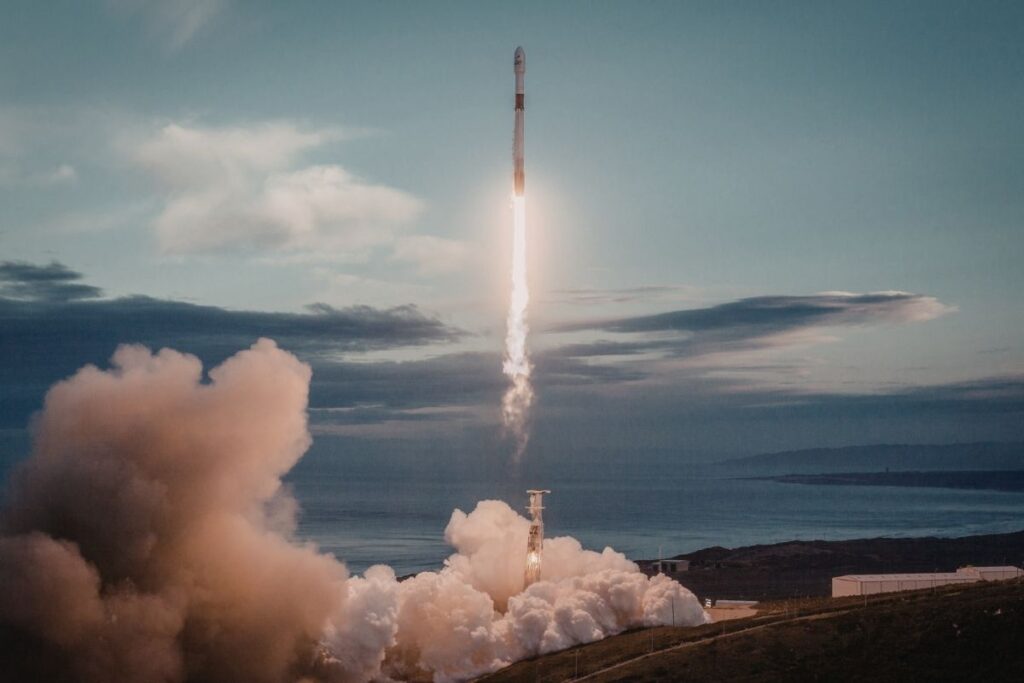




The first time in 18 months that SpaceX has launched its Falcon Heavy rocket is today, April 27, 2026. The rocket has made 12 flights since its first one in 2018, and all of them have been successful. SpaceX’s Falcon 9 flew at a record speed, and Starship got all the attention. The big rocket had nothing to do. The noise is now coming back to life.
This mission began at the well-known Launch Complex 39A (LC-39A) at Florida’s Kennedy Space Centre. The Space Shuttle and Apollo 11 both landed on this pad. At 10:21 a.m. EDT, the launch window started.
Last week’s Falcon Heavy trip was exciting. NASA’s Europa Clipper mission, whose job it is to look for signs of life under the cold surface of Jupiter’s moon Europa, took off in October 2024 on the Falcon Heavy.
Table of Contents
The third and final satellite in the ViaSat-3 F series is a Ka-band internet satellite that is meant to improve the company’s in-flight WiFi, which is used on many business jets and airliners. Mariners, homes, companies, the government, and the military will all be able to connect to the internet through the satellites.
The satellite, which weighs 6.6 tonnes, is going to geostationary orbit (GEO), which is 22,236 miles above Earth. Because Earth is rotating at the same speed as the satellite at this height, the satellite will “hover” over the same spot over and over. The whole Asia-Pacific region is in that area.
The ViaSat-3 class of Ka-band satellites is expected to provide unprecedented capabilities in terms of service speed and flexibility for a satellite platform, with the third satellite completing ViaSat’s global service coverage.
Three modified Falcon 9 first-stage engines give the Falcon Heavy 5.1 million pounds of power at liftoff. Together, the two side boosters will land at Cape Canaveral Space Force Station eight minutes into the flight. The centre core booster will then be released into the Atlantic Ocean.
Launching the satellite on a Falcon Heavy rocket cuts down on the time it takes to get into orbit by putting it in a better transfer orbit. From there, the satellite’s electric power will take over and put it into its final geostationary orbit.
The mission will see a second engine burn at around T+26 minutes, a third burn nearly five hours after launch, and satellite separation from Falcon Heavy’s upper stage approximately five hours after liftoff.
ViaSat-3 F1 entered service in 2024, while ViaSat-3 F2 in-orbit testing is advancing with its reflector successfully completing bloom — final deployments are expected to be completed over the coming weeks. With F3 now on its way, the constellation is complete.
Following launch, the ViaSat-3 F3 satellite will spend several months travelling to geostationary orbit before arriving at its reserved orbital slot, then go through rigorous in-orbit testing of both the bus and payload before entering service — expected to occur by late summer 2026.
No easy steps were taken to get to this launch. At first, this satellite was going to be sent into space on an Ariane 6 launch from French Guiana. The European launcher was taking longer than planned to be built, and Ariane 6 had more work to do because cargo that had been on Russian Soyuz rockets had to find new vehicles after Russia attacked Ukraine. This meant that the launch was changed to Falcon Heavy.
For the ViaSat-3 program, getting this third satellite up completes the global constellation architecture Viasat has been building toward. The Asia-Pacific coverage gap closes once F3 reaches its operational slot — meaningful for aviation and maritime broadband customers across one of the world’s busiest regions.
As Dave Abrahamian, Viasat’s VP of Space Systems, put it: “This launch marks a pivotal moment in our journey to bring fast, secure and reliable high-capacity, highly flexible broadband to our commercial, defence, and consumer customers.”

Sign up to receive our email, delivering the latest stories straight to your inbox.