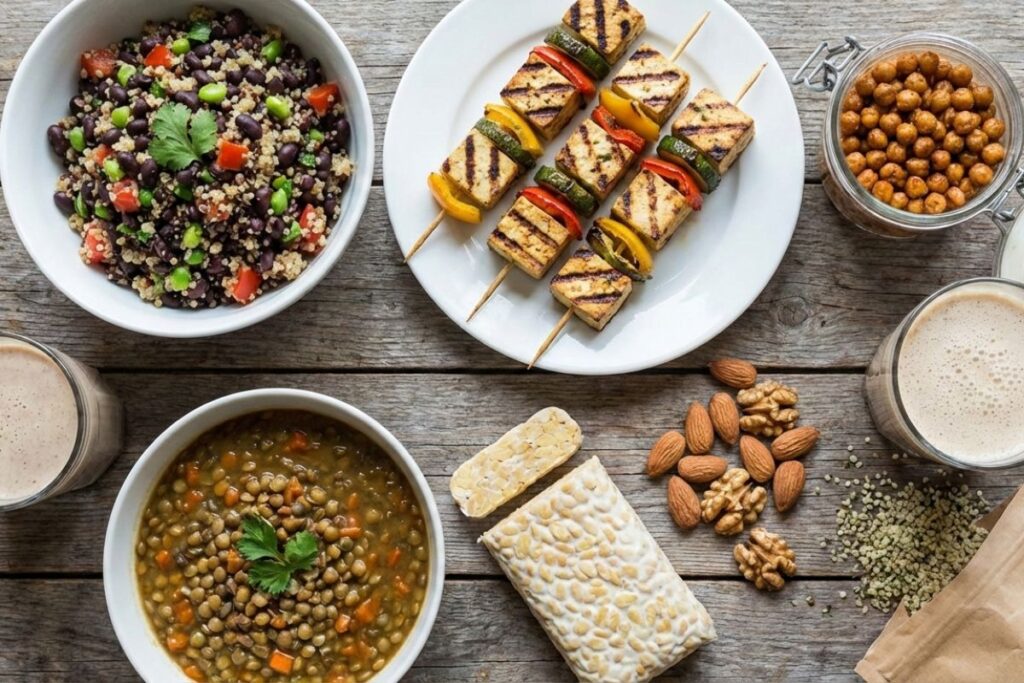




A well-balanced diet is an important requirement for healthy living. Among some of the most prevalent myths circulating in relation to a vegan diet is that a vegan diet is protein-deficient. It is important to note that a number of foods that are high in protein can easily form part of a healthy daily diet. Whether you are vegan or planning on changing to a high protein vegan foods or planning on increasing the number of plant protein meals that you consume, this article will come in handy.
Table of Contents
Protein is very important in lick wounds to restore them to their original form, in fighting off diseases through the immune system, in producing hormones in animals to aid growth in offspring, as well as in catering to all aspects of an organism’s upkeep within animals’ bodies.
Protein is very important in lick wounds to restore them to their original form, in fighting off diseases through the immune system, in producing hormones in animals to aid growth in offspring, as well as in catering to all aspects of
Also Read: Vegetarian 7-Day Healthy Eating Plan for Energy and Vitality
Lentils are another amazing plant protein option. One cup of cooked lentils holds about 18g of protein.
They are a rich source of fibre, iron, and folate, making them a great addition to a healthy heart and digestive system.
Lentils also have very low fat content, making them a healthy addition to a weight loss diet.
How to Use: In soups, curries, salads, and lentil patties
A cup of boiled chickpeas provides 14-15g proteins. Chickpeas are very versatile, economical, and filling.
How to use: Humus, chana masala, parched chick pea snacks, salads.
These beans contain an average of 13 to 15 grams of protein per cup.
How to use: Burrito bowls, chilli, bean salads, and wraps.
Tofu is made out of soybeans and has approximately 20 grams of protein per serving. Tofu is a complete protein source that consists of all the necessary amino acids.
How to Use: Stir fries, tofu scrambles, grilling tofu, and curries.
It is fermented soy that has approximately 30 grams of protein per cup. Fermentation is very beneficial for digestion.
How to Use: Stuffed sandwiches, Stir fries, baked recipes.
Edamame are soybeans that are harvested when young. They are a rich source of protein. Approximately 17 grams of protein are found in one cup of edamame. They are also rich in calcium
How to use: Steam snacks, salads, and grain bowls.
It is a complete protein-containing cereal with about 8 grams of protein per cup of cooked material. In addition, its benefits include being gluten-free and containing lots of magnesium.
How to use: Breakfast bowls, salads, and as a rice substitute.
Almonds, peanuts, cashews, and peanut butter deliver between 6-8 grams of protein. They also supply healthy fats.
How to Use: Smoothies, Spreads, Snacks, or Sauce.
Seeds are high in protein and contain many omega-3 fatty acids. Hemp seeds contain almost 10 grams of protein in three tablespoons.
How to use: Use as a topping on oatmeal, smoothies, or yoghurt substitutes.
Seitan has approximately 25g per 100g serving, making it one of the most protein-rich foods that is vegetarian.
How to use: Stir-fries, vegan kebabs, meat substitutes.
(Not recommended for those with gluten intolerance.)
Green peas only contain around 9 grams of protein in one cup. Green peas are not often considered a protein source.
How to use: Soups, curries, pasta dishes, and fried rice.
Oats are rich in protein, which comprises 6 grams per cup. They are good to consume as an energy-giving food throughout the day.
How to use: Oatmeal, smoothies, and baked treats.
Also Read: What Foods to Avoid with Diabetes And What to Eat Instead | Simple Guide
To have a balanced diet:
High protein Vegan foods make it easy to get a nutritious, well-balanced diet without using protein from animals. Through proper planning, protein in a vegan diet can help you stay healthy or strong. It is important to consider whether you are training, needing protein in your diet, or choosing this diet due to ethical issues; a protein-rich diet is feasible.
1. Can vegans meet their daily protein requirement?
Yes, vegans can obtain their daily protein needs from an assortment of foods such as legumes, soy products, whole grains, nuts, and seeds.
2. Which is the best vegan protein source?
Soy products such as tofu, tempeh, and edamame are some of the best protein sources because of their protein and amino acid makeup.
3. Do vegans require protein supplements?
Vegans can get all the nutrients they need from a balanced diet. Athletes may need supplements if they require a lot of protein.
4. Can plant protein be used for muscle building?
Yes, vegetable protein helps promote muscular development when appropriately consumed along with weight training.
5. How much protein does a vegan need each day?
So, on average, the protein intake per day is 0.8 to 1 gram per kilogram of body weight in adults.
6. Is vegan protein good for weight loss?
Moreover, true high-protein vegan foods are filling, low in saturated fat, and help suppress appetite.

Sign up to receive our email, delivering the latest stories straight to your inbox.